Breast & Body Procedures
Mommy
Makeover
A comprehensive surgical transformation combining breast and body procedures to restore your pre-pregnancy figure — personalized to your goals, anatomy, and timeline.
About the Procedure
A "Mommy Makeover" is a surgery that addresses changes caused by pregnancy and nursing to the stomach and breasts. Typically, it includes a combination of abdominoplasty, liposuction or liposculpting, breast augmentation, breast reduction, breast mastopexy (lift), or both augmentation and mastopexy.
Most mommy makeover surgeries address the breasts and abdomen simultaneously — but these operations do not have to be done at the same time. Other areas of concern can also be addressed, such as excess fat, cellulite, or loose skin on the armpits, back, or thighs.
Do I have to be a mother?
Definitely not. Any patient who desires a flatter, more defined belly and bigger or better-shaped breasts can have a mommy makeover — whatever you call it is up to you.
Why a Mommy Makeover?
Pregnancy and bringing a child into the world are a beautiful miracle and a great accomplishment. It is also a transformational journey that causes many changes to a woman's body — including sagging of the breasts (breast ptosis), loss of breast fullness, and loose, stretch-marked skin. Some women are also left with a rectus diastasis (when the six-pack muscles get stretched apart) or may struggle with excess weight after pregnancy.
A Mommy Makeover lifts and/or augments the breasts and flattens and contours the abdomen, creating a whole-body transformation that restores the youthful appearance of the breasts and stomach. This is a very powerful and popular operation for mothers once they are done having children.
When Can I Have One?
It is important to be fully recovered and for the changes caused by pregnancy to resolve as much as possible before surgery. Dr. Poppler recommends waiting until:
Having surgery before these changes fully resolve often results in ptosis or loose skin returning after recovery — producing a less optimal long-term result. It is also not a good idea to have an abdominoplasty at the same time as a C-section, as results rarely look good.
Which Breast Surgery?
During your consultation, Dr. Poppler will discuss your goals and perform a detailed examination. The two of you will look in the mirror together and discuss what you like and don't like about your breasts. Differences between the breasts and unique features of your body will be noted, and together you will decide the right procedure or combination of procedures.
Breast Augmentation
For patients who want larger breasts. Can be done with implants or fat transfer.
Mastopexy (Lift)
For breasts with significant droop (ptosis) that you want higher and perkier. Often combined with augmentation.
Breast Reduction
For breasts that are larger than desired. Lifts the breasts while making them smaller.
Liposuction & Liposculpting
Liposuction
Liposuction removes fat from specific problem areas. During a mommy makeover, it is most often used to remove fat from the back at the love handles. This creates a more defined hourglass shape and makes the hips and butt appear larger without adding anything to those areas. If you are bothered by your love handles or want a more curvy silhouette, liposuction of the flanks is likely a great addition.
Liposculpting
Liposculpting is a form of liposuction in which fat is more precisely removed adjacent to your abdominal muscles to highlight their contour and give a more defined, statuesque abdomen. It is an excellent choice for patients who are thin with strong abdominal muscles but don't quite have a six-pack.
This technique requires in-depth anatomical knowledge, an artistic eye, and meticulous attention to detail. Not many surgeons offer it, as it requires considerable experience. For the right patient, liposculpting is one of Dr. Poppler's favorite operations — it takes results from good to excellent.
Rectus Diastasis
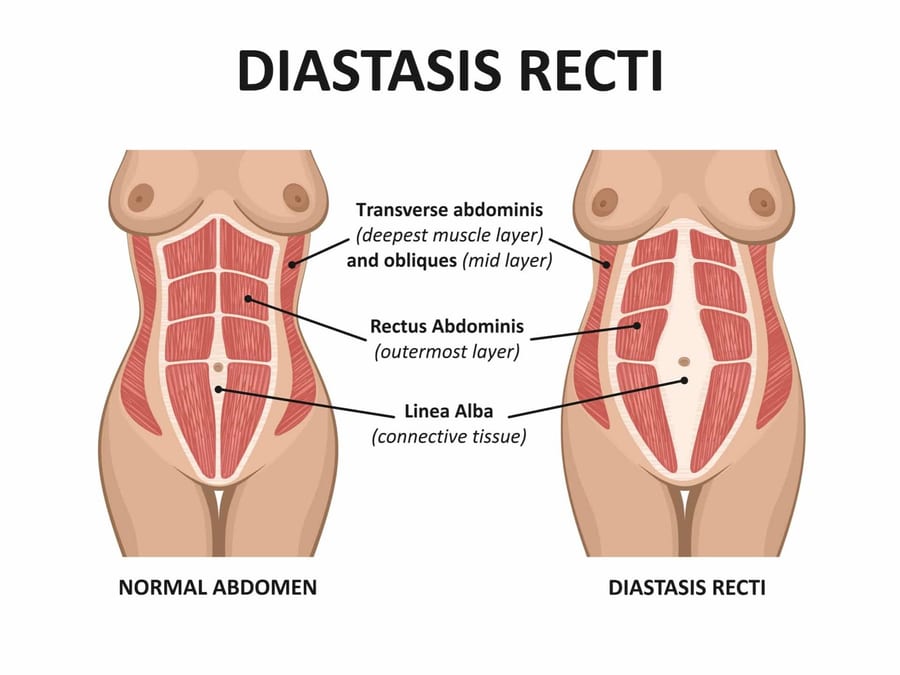
A rectus diastasis is a deformity of the abdominal wall that is common in mothers. Caused by pregnancy (or occasionally being very overweight), the six-pack muscles (rectus abdominus) separate from the midline. This can cause the abdomen to bulge and women to look pregnant even when they are not. It can also cause weakness of the core muscles, muscle imbalance, and chronic low back or abdominal pain.
How is it repaired?
During a tummy tuck, Dr. Poppler makes a low incision hidden under skimpy underwear or swimsuits. Through this incision, he exposes your abdominal wall from the rib cage to the pelvis and uses several individual, permanent, non-braided sutures to bring the muscle edges back together at the midline. The stretched fascia is folded in on itself — no incisions through the abdominal wall are made, so there is no risk of creating a hernia.
Is it covered by insurance?
Although rectus diastasis can be very debilitating, insurance companies consider it cosmetic rather than a medical condition, so repair is not covered. This is an ongoing form of systemic injustice that feels — and is — very unjust. If you want to advocate for change, speaking with your state and federal representatives is the most effective path. We would be happy to support that effort.
What About a Hernia?
Dr. Poppler will carefully examine you during your consultation for any possible hernia (a hole or weak point in the abdominal wall). If he suspects one, he may order an ultrasound or CT scan. Small hernias can be repaired as part of your abdominoplasty. In the rare case that a small hernia is found during surgery, Dr. Poppler will repair it at no extra charge. Large or complicated hernias will be referred to a general surgeon specialist. Having a hernia repaired may slow your return to heavy lifting as it is important to let that heal properly before stressing it.
Should I Lose Weight First?
If you are significantly overweight or have a large amount of intra-abdominal fat, you may not be a good candidate for mommy makeover, and Dr. Poppler may recommend losing weight before surgery to improve your result and reduce risks. Best results are achieved when you are at the weight you intend to stay at. Losing weight before surgery is not helpful if you expect to gain it back. Similarly, surgery before weight loss produces a sub-optimal result because skin will loosen again and breasts will change as you lose weight. It is best to have surgery when you are at a stable, happy weight.
Where Are the Scars?
Abdomen
A low incision is made just above the pubic area and below the hip bones (pelvis), carefully positioned so the scar is hidden under skimpy underwear or swimsuits. A small scar around the belly button is common if it is repositioned — Dr. Poppler uses a technique to hide this scar inside the natural belly button crease.
Breasts
For breast augmentation, the incision is typically hidden in the fold under the breast. For mastopexy or breast reduction, incisions are discreetly placed around the areola, and may also run from the bottom of the areola to the breast fold.
Recovery
Recovery from mommy makeover surgery usually takes about 6 weeks. Most patients return to light activities within 1–2 weeks, and work in 3–4 weeks. Return to most exercise is possible about 3–4 weeks after surgery. If you have your muscles tightened (rectus diastasis repair) during abdominoplasty, you will have some lifting and twisting restrictions for 3 months. Swelling is typically mostly gone in 4 weeks but will come and go for about 3 months. The more procedures included in your mommy makeover, the longer recovery will take.
Possible Complications
Like all surgeries, mommy makeover has risks. They are small but are higher in people with smoking, poor nutrition, diabetes, auto-immune diseases, or blood-thinning medications. Possible complications from most to least common:
At Treasure Valley Plastic Surgery, your safety is our number one priority, and all surgical prices include an insurance plan to help pay for care related to any complications.
Is It Safe?
A mommy makeover is generally very safe when performed on appropriate patients by a board-certified plastic surgeon. Like all surgeries, there are risks such as infection, bleeding, fluid build-up, or scarring. Choosing an experienced surgeon like Dr. Poppler, following his advice to modify any risk factors before surgery, and following aftercare instructions lowers these risks and improves results.
Treasure Valley Plastic Surgery