Breast & Body Procedures
Breast
Augmentation
Personalized breast enlargement using implants, fat transfer, or the Preservé technique — chosen together with Dr. Poppler to match your anatomy, lifestyle, and goals.
About the Procedure
Breast augmentation — also called augmentation mammaplasty — is one of the most performed plastic surgery procedures in the United States. It enlarges the breasts using implants, fat transfer, or the minimally invasive Preservé technique, and is frequently combined with a breast lift (mastopexy) for patients who also have sagging.
Although many surgeons in Boise, Meridian, Eagle, and Canyon County offer this procedure, it is important to choose a surgeon certified by the American Board of Plastic Surgery — like Dr. Poppler — who has the training and experience to produce beautiful results and minimize complications. ABPS certification requires a minimum of six years of surgical training, passage of written and oral board examinations, and ongoing continuing education.
Dr. Poppler regularly sees patients seeking second opinions and revisions after procedures performed by non-board-certified providers. Your consultation will include a thorough review of your anatomy, hobbies, physical activity, prior surgeries, and medical history to build the right plan for you.
Verify your surgeon
Only a surgeon certified by the American Board of Plastic Surgery has completed the full surgical training pathway required to perform breast augmentation safely. You can verify certification at abplasticsurgery.org.
Where Are the Scars?
Incision placement depends on the technique used. Dr. Poppler carefully accounts for how skin heals and stretches so the final scar position is as discreet as possible. All surgical prices include scar management — silicone tape, silicone gel, and laser treatments as needed — to help scars heal well.
Inframammary Fold
Most CommonA single incision hidden in the natural fold beneath the breast. Typically the most discreet placement and gives the best surgical access for precise implant positioning.
Periareolar
With LiftAt the lower border of the areola. Used when a breast lift is performed at the same time, or when the areola border provides the best access for the approach planned.
Axilla (Armpit)
Fat TransferA small incision hidden in the armpit fold. Small access incisions under 1 cm are also used near liposuction donor sites for fat transfer procedures.
Breast Implants
A breast implant is a thoroughly studied medical device available since the early 1960s, with significant technological improvements over the past 20 years. All implants share a soft medical-grade silicone elastomer shell — which is not made of plastic and does not break down the same way plastics do over time.
Silicone Implants
Filled with silicone gel. More popular due to softer feel and longer lifespan (20+ years). Gel cohesivity ranges from soft (low cohesivity) to firm ("gummy bear"). FDA recommends periodic MRI or ultrasound monitoring for silent rupture.
Saline Implants
Filled with salt water. Typically last 10–15 years. No special monitoring needed — leaks are immediately self-evident as the implant deflates visibly. A good option for patients who want the simplest long-term monitoring.
Shell Texture
Highly textured implants have been linked to BIA-ALCL, a rare type of lymphoma — Dr. Poppler does not use these. Modern micro-textured ("smooth silk") implants used in the Preservé technique are not associated with this risk and offer some of the positioning benefits of texture without the concern.
FDA-Approved Manufacturers
Allergan
Saline and silicone; smooth surface only. One of the most widely used and studied implant brands.
Motiva
Silicone only; "smooth silk" micro-texture. Required for the Preservé technique. Dr. Poppler most commonly uses Motiva for above-muscle placement.
Sientra
Silicone only; smooth or textured options available.
Mentor
Silicone and saline; smooth or textured. Offers the largest implants available in the US.
Dr. Poppler most commonly uses Motiva and Sientra breast implants but offers smooth and SmoothSilk implants from all brands and honors warranties for patients with previously placed implants of any brand.
Augmentation with Fat Transfer
Fat transfer (fat grafting) involves using liposuction to harvest fat from an area of the body where you don't want it — such as the abdomen or flanks — processing it to remove damaged cells and non-fat tissue, then injecting it into the breasts. Approximately 70–80% of the transferred fat will survive permanently.
Fat transfer typically increases breast size by up to one full cup size. It is an excellent option for women who have unwanted fat in another area, prefer to avoid implants, and want a modest, natural-feeling increase in size. For very thin patients without sufficient donor fat, an alloplastic fat option (AlloClae — fat from human organ donors) is available at Treasure Valley Plastic Surgery.
Important to know
Fat transfer is generally more expensive and involves a longer, more swollen recovery than implant surgery. It is best suited for patients seeking less than one cup size of increase who prefer the feel of their own tissue and the elimination of unwanted fat elsewhere.
Want Breast Enhancement Without an Implant?
Breast augmentation with fat transfer uses your own fat to provide a modest, natural-feeling increase in breast volume while simultaneously contouring donor areas with liposuction.
Explore Breast Fat TransferThe Preservé Technique
Advanced Above-Muscle Technique
The Preservé technique is a minimally invasive, above-muscle breast augmentation approach developed and taught by Dr. Manuel Chacón in Costa Rica. Dr. Poppler trained directly with Dr. Chacón and is one of the few surgeons in Idaho offering this technique.
Unlike standard above-muscle placement, Preservé preserves the natural support ligaments of the breast and places the implant within the breast tissues themselves — specifically targeting the upper breast to improve fullness and cleavage without adding excess volume to the lower breast. Because no natural support structures are disrupted, the technique minimizes trauma, allows surgery without general anesthesia, and results in dramatically faster recovery.
Is Preservé right for you?
Preservé is ideal for women who want above-muscle placement with minimal recovery, are comfortable with the Motiva implant brand, and are seeking a modest to moderate size increase (up to ~300cc). Its higher cost reflects the specialized training, equipment, and premium implant required. Dr. Poppler will help you determine if it is the best fit at your consultation.
Looking for a More Minimally Invasive Option?
Explore Preservé by Motiva — a specialized breast augmentation technique designed for patients seeking natural-looking, targeted upper breast enhancement while preserving the breast's natural support structures.
Explore PreservéAbove or Below the Muscle?
Implant placement is a personal choice with no universally correct answer. Dr. Poppler will discuss your anatomy, lifestyle, and goals — including whether the Preservé technique changes the equation for you — to help you decide.
Below the Muscle (Subpectoral)
Most Common- Lower risk of capsular contracture
- Better for very thin women — minimizes visible implant edges or rippling
- Generally the most natural-looking result
- May cause mild pectoralis weakening or forward shoulder rotation over time
Above the Muscle (Subglandular)
Situational- Better for heavy weightlifters or those prioritizing shoulder mobility
- No effect on the pectoralis muscle
- Preservé technique available for minimally invasive above-muscle placement
- Requires Motiva implants for the Preservé approach
Choosing Your Implant
Choosing the right implant involves size, shape, projection, gel cohesivity, and brand. Dr. Poppler uses 3D imaging, sizers, and his clinical experience to help you visualize and select the right implant — there is no shortcut for this conversation.
Gummy Bear Implants
"Gummy bear" implants use highly cohesive gel thick enough that the implant does not change shape when you change positions. They remain popular in breast reconstruction because they minimize ripples visible through the skin. However, they are not commonly used for breast augmentation because they create unnatural upper breast fullness when standing and are more expensive than moderately cohesive options. Most implants used for breast augmentation today are moderately cohesive — about the consistency of a melted marshmallow — offering a good compromise between natural shape and minimizing visible ripples.
Natural-Looking Results
The most natural-looking augmentations typically use a size proportional to your frame — often a modest increase. Lower-profile implants, teardrop shapes, under-muscle placement, and lower-cohesivity silicone all contribute to a softer, more natural appearance. Women seeking a more visible augmentation can achieve that too — the key is aligning your goals with the right technique and size during your consultation.
Choosing the Right Brand
For above-muscle placement or the Preservé technique, Dr. Poppler recommends Motiva for its SmoothSilk surface, very low rupture rate, and capsular contracture reduction. For under-muscle placement, Dr. Poppler typically recommends Motiva for the same reasons, or Sientra for its low rupture rate, very soft feel, good value, and excellent warranty. For patients who prefer saline, he recommends Allergan Natrelle. Mentor is reserved for patients who need an implant over 800cc — the only brand offering that size. At your consultation, Dr. Poppler will guide you toward the right choice for your anatomy and goals.
How Long Do Implants Last?
Silicone Implants
FDA recommends MRI or high-resolution ultrasound at 5 years post-placement, then every 3 years, to check for silent rupture.
Saline Implants
No special monitoring needed. A leak is immediately apparent as the implant deflates visibly — no silent rupture risk.
Detecting a Leak
Saline implant leaks are immediately obvious — the breast changes shape within days as the implant deflates. Silicone implants can experience "silent rupture," where the cohesive gel stays contained within the scar tissue capsule with no visible change. This is why FDA monitoring (MRI or high-resolution ultrasound) is recommended for silicone implants — to catch any rupture that wouldn't otherwise be apparent.
Free monitoring for Dr. Poppler's patients
All patients who have breast implants placed by Dr. Poppler receive complimentary ultrasound examinations to check for implant leak or rupture — for life. Ultrasound screening is also included in all breast revision consultations at Treasure Valley Plastic Surgery. For other women concerned about their implants, we offer $100 ultrasound examinations to screen for rupture.
When Should I Replace My Implants?
You do not need to replace implants on a fixed schedule. Many women keep implants for 20 or more years without issue. Replacement is recommended only when a problem develops — such as a confirmed rupture, capsular contracture, implant malposition, or a desired size change. The old "replace every 10 years" guidance is outdated. Dr. Poppler provides lifetime implant monitoring so he can advise you appropriately over time.
The Internal Bra
The internal bra is a surgical modification using absorbable mesh placed inside the breast to provide structural support. The mesh dissolves over about 1–1.5 years, leaving behind scar tissue that permanently supports the breast tissues. It is helpful for women wanting larger breasts who are prone to gravitational drooping, and is particularly useful when implants are placed above the muscle.
The internal bra is more technically complex, slightly increases complication risk, and involves expensive materials — the mesh alone adds approximately $1,000 to the cost of surgery. For these reasons, it is not appropriate for everyone. Dr. Poppler will discuss whether it is a good option for your anatomy and goals.
Why Patients Choose This
Why Women Choose Implants
Why Women Choose Fat Transfer
Why Women Choose Preservé
Should I Lose Weight First?
If you are significantly overweight, you may not be a good candidate for breast augmentation, and Dr. Poppler may recommend losing weight first to improve results and reduce risks. Best results are achieved when you are at the weight you intend to stay at.
Losing weight before surgery is only beneficial if you will maintain it — surgery before weight loss produces suboptimal results as your skin will loosen and breast size and shape will change with the weight loss.
Recovery
Standard Augmentation
~1 week
Light activities
~2 weeks
Return to work
~3 weeks
Intense exercise
~6 weeks
Full recovery
Preservé Technique Recovery
The Preservé technique enables dramatically faster recovery. Most patients return to light activities and work in about two days, and all regular activities within two weeks. This is one of the most significant advantages of the technique for active women.
A supportive bra must be worn at all times for 1.5–3 months. Swelling is mostly resolved at 4 weeks but may come and go for about 3 months.
Fat transfer recovery involves more severe and persistent swelling than implant surgery due to the liposuction component at the donor site.
No drains are required for breast augmentation at Treasure Valley Plastic Surgery.
Possible Complications
Breast Augmentation with Implants
About Breast Implant Illness (BII)
BII is a poorly defined condition with vague symptoms that can be caused by many factors — including perimenopause, hormonal imbalance, chronic stress, and other medical disorders. Some women feel better after implant removal; others do not. The medical community continues to debate whether this is a distinct medical condition. Dr. Poppler will discuss it openly with you at your consultation. See Dr. Poppler's blog for a detailed article on BII.
Breast Augmentation with Fat Transfer (all rare)
- Uneven contour at the donor liposuction site
- Uneven results between breasts
- Need for additional fat transfer sessions to achieve your goals
- Appearance changes with significant weight fluctuation
- Firm lumps (fat necrosis or oil cysts) — benign but may require imaging to rule out cancer
Risks are higher in patients who smoke, have poor nutrition, auto-immune disease, or take blood-thinning medications. At Treasure Valley Plastic Surgery, your safety is our number one priority, and all surgical prices include an insurance plan to help pay for care related to any complications.
Revision Surgery
Some patients require revision surgery to correct a problem or change their result. Minor in-clinic revisions — such as scar revision or small adjustments — start at approximately $500. More complex revisions requiring a return to the operating room are priced based on the specific procedure required.
If You Don't Like Your Size
Within the first year, Dr. Poppler offers a discounted exchange to a different implant size. This is why a thorough consultation with sizing and imaging is so important — to help you choose confidently from the start.
If You Want Implants Removed
Motiva implants include a warranty that covers removal within 2 years if you decide implants are not right for you. Dr. Poppler will review your options — removal with or without a lift, or replacement with fat transfer — at your follow-up consultation.
Dr. Poppler also accepts patients for revision of breast augmentation performed by other surgeons and honors all manufacturer warranties regardless of where the original surgery was performed.
Is It Safe?
Breast augmentation is generally very safe when performed on appropriate patients by a board-certified plastic surgeon. Risks include asymmetry, poor shape, capsular contracture, implant rupture, lumps, pain, and scarring. Choosing an experienced surgeon like Dr. Poppler, following his advice to modify any risk factors before surgery, and following aftercare instructions lowers these risks and improves results. All surgical prices at Treasure Valley Plastic Surgery include an insurance plan to help pay for care related to any complications.
Cost
Breast augmentation at Treasure Valley Plastic Surgery starts at approximately $7,500 and may range up to approximately $15,000 depending on the technique, implant brand, and additional procedures combined (such as a breast lift). The Preservé technique is approximately 50% more expensive than standard augmentation due to the specialized training, equipment, and premium Motiva implant required.
What's Included in the Price
Consultation Fee
A $150 consultation fee is required to meet with Dr. Poppler. This fee is applied toward the cost of surgery if you proceed. Call (208) 753-2400 to schedule.
Frequently Asked Questions
Medical Author
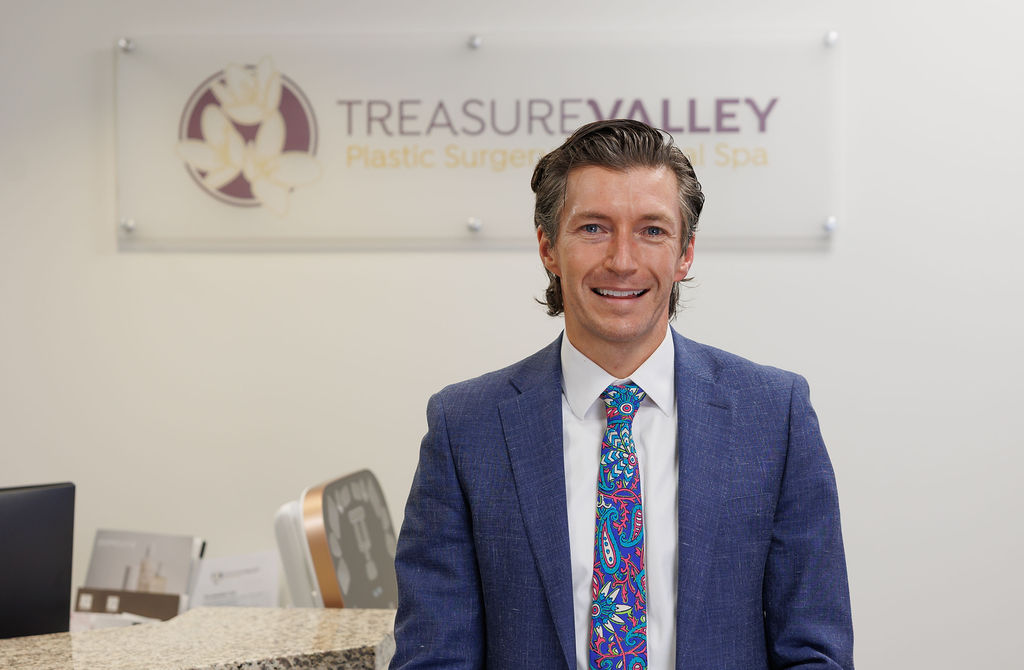
Dr. Louis Poppler, MD, MSCI
Board-Certified Plastic Surgeon · American Board of Plastic Surgery · Treasure Valley Plastic Surgery, Meridian, Idaho
Treasure Valley Plastic Surgery