
5 Reasons an Erbium Laser Is Better Than CO2 Laser Resurfacing | HALO® TRIBRID™ Boise
- Louis Poppler, MD
- May 26
- 11 min read
Updated: May 27
CO2 Laser vs Erbium Laser: Which Skin Resurfacing Treatment Is Better?
Patients searching for laser skin resurfacing in Boise often hear that CO2 lasers are the gold standard for wrinkles, sun damage, and acne scars. However, newer Erbium:YAG laser technologies like HALO® TRIBRID™, Contour TRL®, and ProFractional™ may provide similar or better results with less downtime and lower risk of pigmentation complications. In this article, we explain the differences between CO2 and Erbium lasers and why many modern providers are transitioning away from traditional CO2 resurfacing.
Patients are often told, or believe, that a CO2 laser is the “best” laser for them. This is a common misconception, and if you had asked me (Dr. Poppler) two years ago, I would have told you the same thing. However, as my team and I did our homework, we quickly realized that the CO2 laser is OLD technology that needs to be left in the past. There is a far superior option that achieves the same thing with far less risk of hyperpigmentation (dark spots), hypopigmentation (white spots), or scarring. That option is called an Erbium:YAG laser and is known by brand names such as the Contour TRL or the ProFrac, and is also found in the Halo laser, and the Halo Tribrid laser. At Treasure Valley Plastic Surgery and MedSpa, we do our research so that you don’t have to. We put our money where our mouth is and invest heavily in bringing you the most effective, safest, and most scientifically proven solutions so that you can know that you are spending your hard-earned money (and recovery time) wisely. We also commit to teaching you the reasoning for our choices so that you can feel confident as you choose the right treatments for you.
In this blog article, I am going to cover:
What are CO2 and Erbium Lasers?
What do CO2 and Erbium lasers treat? And not treat?
What does fully ablative and fractionated/fractional mean?
Why is fully ablative CO2 treatment rare, while fully ablative Erbium treatment is not?
Five reasons an Erbium laser is safer, more precise, and more effective than a C02 laser:
1. Erbium causes ablation more efficiently with less heat damage to adjacent tissues.
2. As Erbium creates less excess heat, it is less likely to cause irreversible color changes to your skin (darkening or bleaching), and safe for people of color.
3. Erbium can be precisely calibrated to cause very superficial, to very deep ablation – this allows customization to your needs not available from a CO2 laser.
4. As Erbium creates less excess heat, it is less painful than CO2 laser treatment.
5. As Erbium creates less excess heat, recovery after Erbium treatment is faster than CO2 laser treatment.
Why doesn’t everyone switch to Erbium if it is so much better?
Both CO2 and Erbium lasers are ABLATIVE, or RESURFACING lasers
Before we dive into the reasons that an Erbium laser is a much better and safer choice for you, let’s talk about what these lasers are designed to do, and what they are not designed to do. CO2 lasers and Erbium lasers are both ablative or resurfacing lasers. This means that they vaporize the tissues that their laser beam of light contacts, creating small burn wounds at the surface of your skin. Your body then heals these wounds by recruiting stem cells from the neighboring tissues and deeper layers of your skin to grow brand new skin cells. Because these skin cells are brand new, they look younger and healthier.
Ablative, resurfacing lasers treat the skin surface only. Ablative lasers stimulate collagen and elastin production and create temporary skin tightening, which can reduce wrinkles. They do not treat deeper pigmentation issues.
Ablative lasers are typically designed for patients who have fine lines and wrinkles, but also can help give the glowing, glass skin look that comes from good skin care and sun protection. Ablative lasers can fix pigmentation (color) changes on the surface of your skin but are not designed to address pigmentation changes in the deeper layers of your skin (where most pigmentation problems arise). If you are primarily concerned about dark spots or age spots, an ablative laser like CO2 or pure Erbium is NOT the right choice for you and you would be better served by a non-ablative laser such as the Moxi. The Halo Tribrid, which is only available in Southwest Idaho at Treasure Valley Plastic Surgery and MedSpa combines three lasers into one and includes not only an Erbium resurfacing laser, but also two non-ablative frequencies so that it can treat both texture problems at the surface like wrinkles AND deeper pigmentation changes. For this reason, it is usually the best option for patients who desire to look younger and healthier.
Fully ablative lasers remove the entire skin surface, while fractional ablative lasers remove thousands of tiny dots from the skin surface.
All lasers (both ablative and non-ablative) can be administered to the entire surface of the skin (full coverage, or fully ablative), or to thousands of small spots (partially ablative, or fractional/fractionated). The higher the percentage of surface area treated, the more effective the treatment, but also the longer the recovery and the higher the risk of complications. In modern times, it is extremely rare to have a fully ablative CO2 laser treatment because the risks outweigh the benefits in most cases. Therefore, when we talk about CO2 laser treatment, we are mostly talking about fractional/fractionated lasers.
Erbium lasers are more precise with less risk of heat injury and therefore can still be safely offered as a fully ablative option, unlike CO2.
Erbium lasers are more precise with less risk of heat injury, and therefore fully ablative Erbium laser treatments are still common. Erbium laser treatments should only be done by highly trained providers with extensive knowledge of skin anatomy, wound healing, and burn care, such as a board-certified plastic surgeon and their closely trained and supervised team members. At Treasure Valley Plastic Surgery and MedSpa, we offer both fully ablative treatment (the Contour TRL, microPeel, nanoPeel) and partially ablative treatment (the ProFrac and included in the Halo Tribrid treatment).
1. An Erbium:YAG laser wavelength is optimal for skin ablation.
Ablative resurfacing lasers like CO2 and Erbium target water molecules in the skin to create their effect. Erbium:YAG lasers like those available at Treasure Valley Plastic Surgery and MedSpa generate a wavelength of light (2,940nm) that is much more avidly absorbed by water in the skin than CO2 laser light (10,600nm). As a result, the water in the skin vaporizes much more quickly when exposed to Erbium light, as CO2 light. This means that far less heat is produced in the surrounding tissues and that Erbium laser light can vaporize much thinner layers of tissue compared with CO2 lasers. Excess heat generated by water vaporization damages the adjacent 3nm of tissues vs. 40+nm of adjacent tissue damage for a CO2 laser.

Image 1 - Water absorbs the 2940nm wavelength of Erbium:YAG laser light much more efficiently than the 10,600nm wavelength of CO2 laser light.
Laser Type | Wavelength | Main Tissue Target | Minimum Vaporization Depth | Adjacent Heat Spread (Zone of Thermal Damage) |
Erbium:YAG | 2,940nm | Water (highest absorption) | 2-5 micrometers | 5-10 micrometers |
Carbon Dioxide (CO2) | 10,600nm | Water (moderate absorption) |
20-30 micrometers | 50-150 micrometers |
Table 1 - Erbium laser light can produce a much more shallow vaporization injury and produces a far smaller zone of thermal injury than CO2 laser light.
As CO2 laser light causes much deeper and wider injuries, it is often very effective. However, it is also very high risk for scarring and permanent, irreversible skin color changes like skin bleaching or post-inflammatory hyperpigmentation (PIH). For these reasons, CO2 lasers should not be used on Asians, brown, or black skinned patients.
2. Erbium:YAG laser treatments are less likely to create hyperpigmentation or skin bleaching than CO2 treatments.
Neither Erbium nor CO2 wavelengths directly target melanin, the molecule in our skin that gives it color. There are lasers that directly target melanin that can be used for patients seeking to address hyperpigmentation such as the Halo Tribrid, or the Moxi. Color changes in the skin caused by CO2 lasers (or rarely Erbium lasers) come from the heat generated by the laser treatment that either irritates the melanocytes (causing them to produce excess pigmentation) or kills them (creating skin bleaching).
Melanin is created by melanocytes, which are located primarily in the deepest layer of our epidermis at our dermal-epidermal junction, and deeper in hair follicles. Areas where the epidermis is thinner or has less hair follicles, such as the upper eyelids or the neck are more prone to discoloration when treated with an ablative laser because the melanocytes are closer to the surface and therefore more likely to get injured.

Image 2 - Layers of the skin – Melanocytes are located in the deepest layer of the epidermis at the dermal-epidermal junction. Some melanocytes are also located deep in hair follicles.
Body Area | Epidermal Thickness | Density of Hair Follicles | Risk of Hyperpigmentation or Skin Bleaching |
Forehead | 84-93 micrometers | Very High | Low |
Cheeks | 79-98 micrometers | Very High | Low |
Eyelids | 40-50 micrometers | High | High |
Neck | 50-70 micrometers | Low | High |
Upper Chest “Decolletage” | 39-44 micrometers | Very Low | Very High |
Hands | 90-100 micrometers | Very Low | Moderate |
Forearms | 90-100 micrometers | Low | Moderate |
Table 2 - Areas of skin with a thicker epidermis, or with more hair follicles, are less likely to have color changes caused by an ablative laser.
As Erbium lasers create far less unintentional heat spread, there is far less chance of creating post-inflammatory hyperpigmentation (PIH) and dark discolored patches or skin bleaching (white spots or patches). This is also why Erbium lasers are safe to use in colored skin and during the summer, when people’s skin is tanned.

Image 3 – A) hypopigmentation (skin bleaching) caused by CO2 laser treatment. B) hyperpigmentation caused by CO2 laser treatment.
3. Erbium:YAG lasers can be tuned for very aggressive, very light, and everything in between treatments. CO2 lasers cannot.
Erbium laser light can cause an equivalent injury to CO2 laser light when needed. This is done by increasing the laser settings (energy delivered, pulse duration, spot size) and by treating the same spot with multiple hits of light (stacking) to achieve the same levels of tissue damage. As a result, your provider can choose to be more aggressive in the areas that really need aggressive treatment, and less aggressive in areas that don’t need aggressive treatment and in areas that are at higher risk for color change such as on the neck or around the eyes. Think of treating the skin like coloring a coloring book. An Erbium laser is like using a fine-tipped pen, while CO2 laser treatment is like using a fat tipped marker. Both can color in the picture, but the fine tipped pen is likely to give a nicer result because of its increased precision. The key takeaway is that an Erbium laser creates an aggressive injury intentionally only, never by accident. CO2 lasers always create an aggressive injury and are therefore much more dangerous.

Image 4 – The Contour TRL is the full field ablative Erbium laser available at Treasure Valley Medspa. This treatment stimulates the dermis to grow new collagen and elastin, and results in complete replacement of the epidermis with healthy, new skin cells. When used in an aggressive manner, it is best for treating deep lines and wrinkles, but comes with more downtime as it creates a more extensive injury than a fractionated laser like the ProFrac. Fully ablative CO2 lasers are almost never used due to long recovery times and safety concerns.

Image 5 – The Profractional laser is the fractionated Erbium laser available at Treasure Valley MedSpa. Fractionated lasers create thousands of tiny injuries through the epidermis and into the dermis. These injuries cause the dermis to grow new collagen and elastin and stimulate some remodeling of the epidermis. As these injuries are surrounded by healthy tissues, healing is faster. Most CO2 lasers are fractionated like this because of the much larger zones of injury created by CO2 even at the lowest settings.
Alternatively, the settings of an Erbium laser can be set to avoid thermal damage. A “cold laser” treatment minimizes heat generation in the skin. This allows very superficial treatments with minimal downtime such as the nano-peel, which can give the skin a youthful glow, but does not cause significant skin tightening. These treatments are also known as a “Hollywood peel” or a “lunchtime peel.” CO2 technology can’t provide the same treatment because the thermal damage inherent in the wavelength of 10,600 nm makes it impossible to treat a patient without heating the adjacent tissues. Practitioners using Er:YAG lasers are afforded the option to cater treatments to each patient better and can elect to build thermal damage by increasing the pulse duration, or keeping those thermal effects limited.
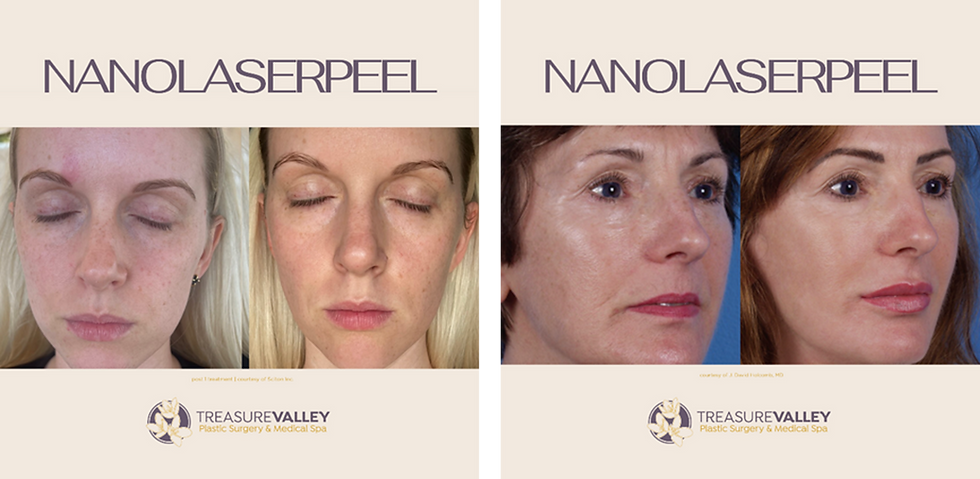
Image 6 – The Nano Laser Peel uses the Contour TRL, fully ablative Erbium laser on very superficial settings to remove the very top layer of skin resulting in a brighter and more even complexion. This is known as a “Hollywood peel” or “lunchtime peel” as you can have it done on Friday and be back at work looking refreshed on Monday.
4. Erbium:YAG lasers are less painful because they create less thermal damage.
As Erbium creates minimal unintentional heat spread, Erbium laser treatments are significantly less painful than CO2 laser treatments. They usually do not require sedation or general anesthesia. A topical anesthetic is typically sufficient for a painless, and enjoyable treatment experience with an Erbium laser.
5. Erbium:YAG treatments require a shorter recovery time compared to CO2 lasers.
Erbium lasers can create shallower wounds and less adjacent heat damage than CO2 lasers. This allows those wounds to heal faster. Erbium lasers can also create equivalent injuries to CO2 laser, when necessary and when safe to do so. The length of recovery is directly proportional to the depth and extent of injury, so the more aggressive the treatment, the longer the recovery. Typical recovery after an Erbium laser treatment is 1 week of swelling, redness, and peeling followed by 2-3 weeks of mild redness.
Final Thoughts: Why We Chose Erbium Laser Technology
At Treasure Valley Plastic Surgery & Medical Spa, patient safety and treatment quality always come first. After extensive research into modern laser resurfacing technologies, we chose to invest in advanced Erbium:YAG laser platforms because they offer greater precision, improved customization, faster recovery, and a significantly lower risk of complications compared to traditional CO2 lasers.
Unlike older CO2 technology, Erbium lasers allow us to tailor treatments to each patient’s unique skin type, concerns, and recovery goals. Treatments can range from light “lunchtime peel” rejuvenation to aggressive wrinkle and scar resurfacing, all while minimizing unnecessary thermal injury to surrounding tissues. This improved precision means less discomfort, less downtime, and safer treatment for a wider range of skin tones, including patients who may not be ideal candidates for CO2 laser resurfacing.
We also chose to invest in the HALO® TRIBRID™ platform because it represents the future of skin rejuvenation. By combining ablative Erbium resurfacing with additional non-ablative wavelengths, HALO® TRIBRID™ can simultaneously improve wrinkles, texture, pigmentation, sun damage, redness, and overall skin quality in a single customizable treatment. This multi-layer approach allows patients to achieve more comprehensive, natural-looking results with improved efficiency and recovery.
There is a great deal of misinformation surrounding laser resurfacing treatments, and many patients still believe that CO2 lasers are the gold standard simply because they have been around longer. In reality, newer Erbium-based technologies often provide equal or superior results with a better safety profile and a more comfortable recovery experience.
At Treasure Valley Plastic Surgery & Medical Spa, we are committed to offering scientifically supported, evidence-based treatments that prioritize both safety and results. We do our homework so that you don’t have to. Our goal is not simply to provide laser treatments, but to help patients in Boise, Meridian, Eagle, and throughout the Treasure Valley make informed decisions about their skin health and rejuvenation options. Book a complimentary consultation with us and we will analyze your skin using our 3D Aura scanner and our extensive experience, discuss your goals, and tell you if an ablative laser treatment using our Sciton Erbium laser, a multi-wavelength laser like the Halo Tribrid, or another laser is right for you.

Image 7 – The Halo Tribrid laser combines the power of fractionated ablative Erbium laser treatment with two additional laser wavelengths that target redness and melanin (brown spots) in the dermis. This allows all layers of the skin to be treated at once for dramatic improvements in skin texture, color, and to reduce lines and wrinkles.
Schedule a complimentary consultation at Treasure Valley Plastic Surgery & Medical Spa. Our team will evaluate your skin using Aura 3D skin analysis technology and help determine whether HALO® TRIBRID™, ProFractional™, Contour TRL®, MOXI®, or BBL HEROic™ is right for your goals.
Call (208) 753-2400 to schedule your consultation


