
Facial Plastic Surgery
Brow Lift in Boise & Meridian, Idaho
Restore a More Natural, Refreshed Brow Position
A brow lift, also called a forehead lift, is a surgery that raises and repositions drooping eyebrows and improves heaviness of the forehead and upper face. As we age, the brows can gradually sag — a condition called brow ptosis. Low or heavy brows can make you look tired, sad, or angry even when you feel rested and happy, and they can push additional skin down onto the upper eyelids.
The goal isn't to give you higher eyebrows. It's to restore a brow position that naturally fits your face.
Procedure
Brow Lift / Forehead Lift
Surgeon
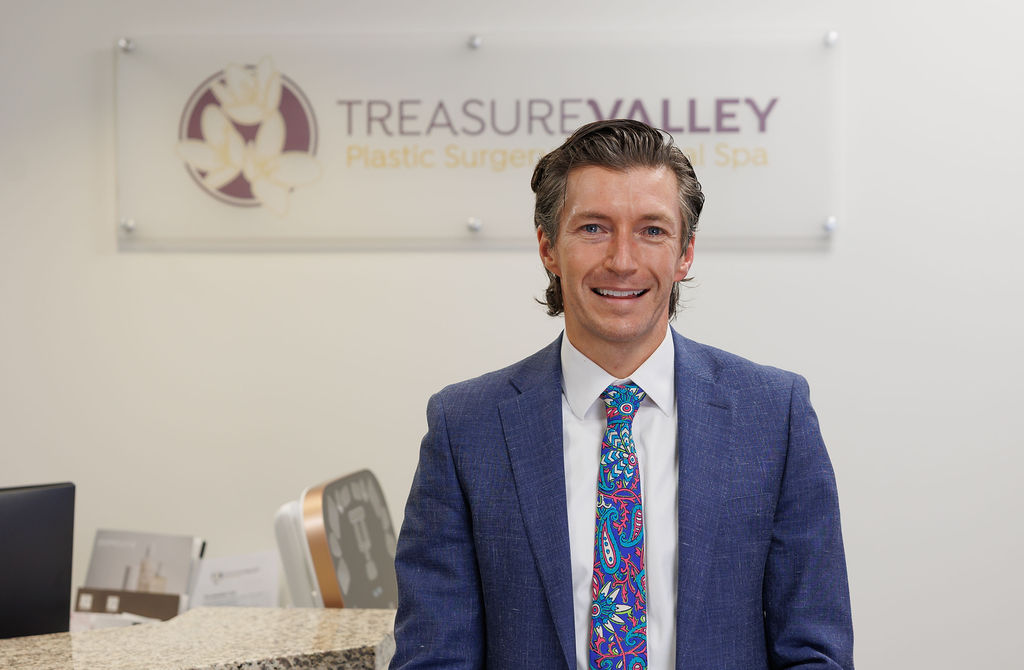
Dr. Louis Poppler
Light Activity
Within a Few Days
Desk Work
~1–2 Weeks
Social Recovery
~1–2 Weeks
Exercise
~3 Weeks
Location
Meridian, Idaho
Recovery varies according to technique, individual healing, and whether other facial procedures are performed at the same time.
What Is a Brow Lift?
Brow lift surgery repositions drooping brow and forehead tissues to restore a more natural, rested position. Aging around the eyes is interconnected — the eyebrows, upper eyelids, temples, and cheeks all change with age.
A heavy appearance around the eyes can result from sagging brows, excess upper-eyelid skin, loss of fat and volume around the eyes, or a combination of these changes. The appropriate treatment depends on what is actually causing the heaviness — not on which procedure is most commonly advertised.
Heavy eyes don't always mean you need eyelid surgery.
And they don't always mean you need a brow lift.
The correct treatment depends upon what is actually causing the heaviness — which is why Dr. Poppler evaluates the brow, eyelids, temples, and surrounding face as a whole before making any recommendation.
Why Do Brows Begin to Droop?
With aging, bones and fat around the eyes shrink and recede, forehead and temple tissues stretch and loosen, and gravity gradually pulls the brows lower. The outer portion of the brow — the "tail" — often drops first, creating lateral hooding and a heavier appearance toward the outer eye.
Brow Descent
Tissues stretch and loosen with age
Outer Brow Hooding
Lateral brow drops toward the eye
Upper Eyelid Crowding
Brow tissue encroaches on eyelid
Heavy Appearance
Patient looks tired, sad, or stern
Compensatory Brow Raising
Some patients compensate for drooping brows by constantly raising their eyebrows — often without realizing it. Over time, this can contribute to deeper horizontal forehead lines, forehead tension, forehead fatigue, and tension headaches.
When brow descent is the primary cause of upper-face heaviness, repositioning the brow can create a more rested and alert appearance without changing the patient's identity.
The Right Treatment Starts With the Right Diagnosis
Do You Need a Brow Lift — or Something Else?
Drooping brows and heavy upper eyelids can look remarkably similar, but they are not the same problem. Most patients bothered by aging of the upper face do not necessarily need a brow lift alone.
01
Concern
Drooping Brow
Potential treatment depending on evaluation
Brow Lift
03
Concern
Lost Volume Around the Eyes, Temples, or Brow
Potential treatment depending on evaluation
Facial Fat Grafting / Volume Restoration04
Concern
Multiple Age-Related Changes
Potential treatment depending on evaluation
Combination Approach
A Simple Clue: What Happens When the Brow Is Repositioned?
During consultation, Dr. Poppler may gently lift the patient's brow into a natural position while looking together in the mirror.
If repositioning the brow opens the eye area and creates the appearance you want
→ Brow lift may be helpful.
If excess eyelid skin remains after the brow is placed into a natural position
→ Upper blepharoplasty may be appropriate instead of, or in addition to, brow lift.
This is not a self-diagnostic test. It is one component of Dr. Poppler's examination and surgical planning — not a substitute for consultation.
Restoring Your Brow — Not Inventing a New One
Dr. Poppler asks patients to bring photographs of themselves at younger ages. Together, they compare previous brow position, current brow position, eyelid appearance, temple volume, and surrounding facial changes. This helps identify which changes are contributing most to the patient's concerns.
A natural brow lift should make you look more like yourself —
not more "done."
Brows should not simply be lifted as high as possible. Young faces do not necessarily have high brows. Over-elevation can create a surprised appearance, an unnatural arch, or an operated look.
Dr. Poppler's goal is to restore a natural position and shape that fits the individual patient's face.
Brow Lift vs. Upper Blepharoplasty
| Factor | Brow Lift | Upper Blepharoplasty |
|---|---|---|
| Primary issue | Low or drooping brow | Excess upper-eyelid skin |
| Primary target | Brow and forehead tissues | Upper eyelid |
| Can improve | Outer brow hooding caused by brow descent | Redundant skin remaining even when brow is in a natural position |
Combination
Some patients have both brow ptosis and excess eyelid skin. In those patients, combining the procedures may provide a more appropriate result than either procedure alone.
Procedures That Can Complement — or Sometimes Replace — a Brow Lift
Upper Blepharoplasty
Addresses excess upper-eyelid skin that remains even when the brow is in a natural position.
Learn moreFacial Fat Grafting
Restores volume in the brows, temples, upper eyelids, and cheeks that is lost with aging.
Learn moreFacelift
Addresses sagging cheeks, nasolabial folds, and jowls — often combined with brow and eyelid procedures.
Learn moreLaser Skin Resurfacing
Treasure Valley Medical Spa
Can improve fine lines, sun damage, texture, and tone. HALO TRIBRID is available at Treasure Valley Medical Spa.
Learn moreLower Blepharoplasty
Addresses under-eye bags, puffiness, and lower-eyelid concerns as part of comprehensive eye rejuvenation.
Learn moreAre There Nonsurgical Options for Drooping Brows?
Nonsurgical treatments in this section are provided by Treasure Valley Medical Spa
For patients with mild brow heaviness, forehead lines, or volume loss, nonsurgical treatment may be an appropriate place to start. Nonsurgical treatments are less invasive and generally involve less downtime, but their effects are more limited than surgery and may require maintenance. They cannot correct substantial brow ptosis.
Neuromodulators
Botox · Dysport · Daxxify
Can soften forehead lines and frown lines. When carefully placed, may create a subtle lift of the outer brow in appropriate patients.
Learn moreVolume Restoration
Fillers · Biostimulators
May restore volume around the temples, brow, and upper face that is lost with age.
Learn moreLaser Treatments
HALO TRIBRID · MOXI
May improve skin quality, texture, tone, and provide mild tightening for appropriate patients.
Learn moreHow Is a Brow Lift Performed?
There is no single brow-lift technique appropriate for every patient. The right approach depends on anatomy, hairline, amount of lift needed, which portion of the brow is sagging, and other procedures being considered.
Gliding Brow Lift
The gliding brow lift uses an incision at the sideburn and another small incision hidden within the hair at the top of the temple. The technique releases the brow and forehead tissues so they can be repositioned. It can lift the entire brow or selectively lift the lateral brow, and can be extended to perform a midface lift without an incision in front of the ear.
This is Dr. Poppler's preferred brow-lift technique.
Dr. Poppler's Second-Favorite Technique
Trans-Blepharoplasty Brow Lift
Performed at the same time as upper blepharoplasty, this approach uses the same upper-eyelid incision to lift the lateral brow. It can be performed in the office without anesthesia or sedation, making it a practical option for appropriate patients.
Endoscopic Brow Lift
The endoscopic approach uses several small incisions hidden behind the hairline and a small camera to release and elevate the brow and forehead tissues. Dr. Poppler previously performed this technique regularly, but in his experience has largely replaced it with the gliding brow lift, which he finds provides improved results, faster recovery, and lower cost for his patients.
Temporal (Lateral) Brow Lift
Uses small incisions in the temple hair to elevate the outer brow through skin excision rather than tissue elevation and repositioning. In Dr. Poppler's clinical assessment, this approach provides a less durable result and a poorer scar than the gliding brow lift for similar purposes.
Hairline (Pretrichial) Brow Lift
Places the incision at the front edge of the hairline. Can be useful for patients with a high forehead because it can lift the brow without moving the hairline higher, and may shorten a long forehead. The incision is angled so hair can grow through the scar and help it blend as it heals.
The Technique Should Fit You
Dr. Poppler is experienced with multiple brow-lift techniques and does not use a one-size-fits-all approach. At consultation, he evaluates brow position, forehead, eyelids, hairline, facial proportions, patient goals, and other procedures being considered — and recommends the approach that best fits the individual patient's anatomy and goals.
Each operation is planned to achieve a natural brow height and shape while keeping scars as discreet as possible.
Where Are Brow Lift Scars?
Gliding / Temporal Approaches
Small incisions positioned in or behind the hairline, where hair helps conceal them.
Hairline / Pretrichial Approach
Incision positioned along the front edge of the hairline, angled so that hair can grow through the scar as it heals.
Endoscopic Approach
Several small incisions hidden behind the hairline.
Trans-Blepharoplasty
Uses the upper-blepharoplasty incision positioned within the natural upper-eyelid crease.
Scar Care Is Included With Surgery
All patients undergoing surgery with Dr. Poppler at Treasure Valley Plastic Surgery receive:
- Medicated silicone scar gel
- Laser treatment of surgical scars
Included as part of the surgical price.
What Type of Anesthesia Is Used for a Brow Lift?
Anesthesia options depend on the surgical technique, combination procedures, patient comfort, and individual preferences. Dr. Poppler offers facial procedures in the office with or without sedation, or in an operating room under anesthesia.
In the Office
Smaller or single procedures — such as the trans-blepharoplasty brow lift — can be performed in the office with or without sedation.
In the Operating Room
Larger or combined procedures use deep sedation or general anesthesia for maximum safety and comfort.
Safety and comfort come first. Dr. Poppler will recommend the appropriate setting and anesthesia plan during consultation.
Brow Lift for Men & Women
The aging process affects the brow similarly in men and women, but natural brow anatomy differs — and those differences matter for surgical planning.
Men
- — Lower natural brow position
- — Flatter brow shape
- — Positioned closer to the bony ridge above the eye
Women
- — Somewhat higher natural brow position
- — Gentle arch toward the outer third of the brow
- — More variation in natural shape
The goal is not to give every patient the same brow.
A brow lifted too high or made too arched can make a man's face appear surprised or more feminine than intended. For this reason, Dr. Poppler focuses on restoring each patient's natural brow position rather than simply raising it. Younger photographs help guide this planning.
Potential Benefits of Brow Lift Surgery
Address a Low or Drooping Brow
Repositions brow tissues that have descended with age to a more natural, rested position.
Reduce Outer-Eye Hooding
Can reduce the heaviness caused specifically by brow descent — not excess eyelid skin.
More Rested Upper-Face Appearance
Many patients no longer appear tired, sad, or stern when they feel well-rested and content.
Reduce Compensatory Brow Raising
Patients who unconsciously raise their brows to lift sagging skin may no longer need to.
May Reduce Forehead Tension
Constant subconscious brow elevation can create forehead tension and fatigue. Repositioning the brow may reduce this.
Combination-Friendly
Can be performed alongside upper blepharoplasty, facial fat grafting, facelift, or other facial procedures when appropriate.
Discreet Incision Options
Multiple techniques allow incisions to be positioned within or behind the hairline or existing creases.
Should I Lose Weight Before a Brow Lift?
Patients planning substantial weight loss may be advised to reach a stable weight before elective surgery. Weight loss after brow lift surgery can reduce facial fat and change the appearance of the brows, temples, and eyes.
Best surgical planning generally occurs when the patient is at a stable weight they intend to maintain.
Brow Lift Recovery: What to Expect
First Few Days
Many patients return to light activities. Sleep with the head elevated as directed.
1–2 Weeks
Many patients return to desk work and feel comfortable being out in public. Head elevation generally continues during this early period.
2–3 Weeks
Most visible swelling and bruising of the forehead and eye area have substantially improved.
Around 3 Weeks
Strenuous exercise is often possible according to Dr. Poppler's postoperative guidance.
Up to ~3 Months
Swelling may continue to fluctuate as the tissues fully settle.
Several Months
Temporary scalp numbness or itching may take several months to fully settle.
Recovery can be longer and swelling more noticeable when brow lift is combined with upper blepharoplasty, fat transfer, or facelift. Recovery varies by patient and surgical technique.
How Long Do Brow Lift Results Last?
A brow lift resets the position of the brows, and many patients enjoy their result for many years. However, no surgery stops the aging process. The face continues to change because of aging, sun exposure, weight changes, and genetics.
Sun protection, medical-grade skincare, and stable weight can help support long-term skin and facial health.
What Are the Risks of Brow Lift Surgery?
Surgical risk may be affected by smoking, poor nutrition, autoimmune disease, and conditions or medications requiring blood thinners. A thorough discussion of your medical history with Dr. Poppler is important. Following postoperative instructions — including avoiding smoking, sleeping with the head elevated, and attending follow-up appointments — helps reduce risk.
Is Brow Lift Surgery Safe?
Brow lift surgery is generally safe when performed on appropriately selected patients by a board-certified plastic surgeon. Choosing an experienced surgeon, modifying risk factors before surgery, and following postoperative instructions helps reduce the likelihood of complications. At Treasure Valley Plastic Surgery, your safety is our number one priority.
To verify a plastic surgeon's board certification, visit find.plasticsurgery.org.
Additional Peace of Mind
Treasure Valley Plastic Surgery includes a complication plan in its surgical pricing that can help pay for care related to a complication.
Treasure Valley Plastic Surgery is a cash-pay practice and does not bill health insurance.
What Happens If I Need Revision Surgery?
Although uncommon, revision surgery is sometimes necessary after a brow lift — for example, to address asymmetry or brow position concerns.
The complication plan included with surgery does not typically cover revision surgery performed solely for concerns such as asymmetry. Treasure Valley Plastic Surgery offers an optional Revision Protection Plan for patients who would like additional financial protection in the event a revision becomes necessary.
Dr. Poppler follows patients closely after surgery and discusses any concerns about healing or results openly and honestly.
An Individualized Approach to Brow & Upper-Face Rejuvenation
Dr. Louis Poppler is certified by the American Board of Plastic Surgery and has extensive training and experience in facial aesthetic surgery. He performs multiple approaches to brow and upper-face rejuvenation rather than offering every patient the same procedure.
His planning considers the brow, eyelids, temples, facial volume, hairline, younger photographs, and individual goals — then determines whether brow lift, upper blepharoplasty, fat grafting, nonsurgical treatment, or a combination approach is most appropriate.
The question isn't simply:
"How high should the brow go?"
It's:
"Where does your brow naturally belong?"
What Does a Brow Lift Cost in Boise, Idaho?
Cost depends on the brow-lift technique, anesthesia, and whether other procedures are performed simultaneously — such as upper blepharoplasty, facial fat grafting, or facelift. Dr. Poppler provides personalized pricing at consultation.
To schedule a consultation, call (208) 753-2400.
Brow Lift Surgery Near Boise, Idaho
Treasure Valley Plastic Surgery is located in Meridian, Idaho and serves patients from Boise, Meridian, Eagle, Nampa, Caldwell, Canyon County, and throughout the Treasure Valley.
During consultation, Dr. Poppler evaluates the upper face as a whole — including brow position, forehead, upper eyelids, temples, surrounding facial volume, hairline, and facial proportions — along with the patient's medical history, previous procedures, and aesthetic goals. The objective is to determine what is actually creating the heavy or aged appearance and whether brow lift, upper blepharoplasty, volume restoration, or a combination approach is most appropriate.
Treasure Valley Plastic Surgery
3277 E. Louise Drive, Suite 375
Meridian, Idaho 83642
(208) 753-2400Frequently Asked Questions
Ready to Begin
What's Actually Making Your Upper Face Look Heavy?
A heavy or hooded appearance around the eyes can result from a drooping brow, excess eyelid skin, lost facial volume — or a combination of changes. A consultation with Dr. Poppler is an opportunity to evaluate your brows, eyelids, temples, and surrounding face and determine whether brow lift, upper blepharoplasty, fat grafting, nonsurgical treatment, or a combination approach best fits your anatomy and goals.
Treasure Valley Plastic Surgery · 3277 E. Louise Drive, Suite 375 · Meridian, Idaho 83642 · (208) 753-2400
Serving Boise, Meridian, Eagle, Nampa, Caldwell, Canyon County and the greater Treasure Valley.
Content reviewed by Dr. Louis Poppler, MD, MSCI · Board Certified Plastic Surgeon · American Board of Plastic Surgery